A Quick Self-Check: Are You Using Avoidant Patterns in Relationships?
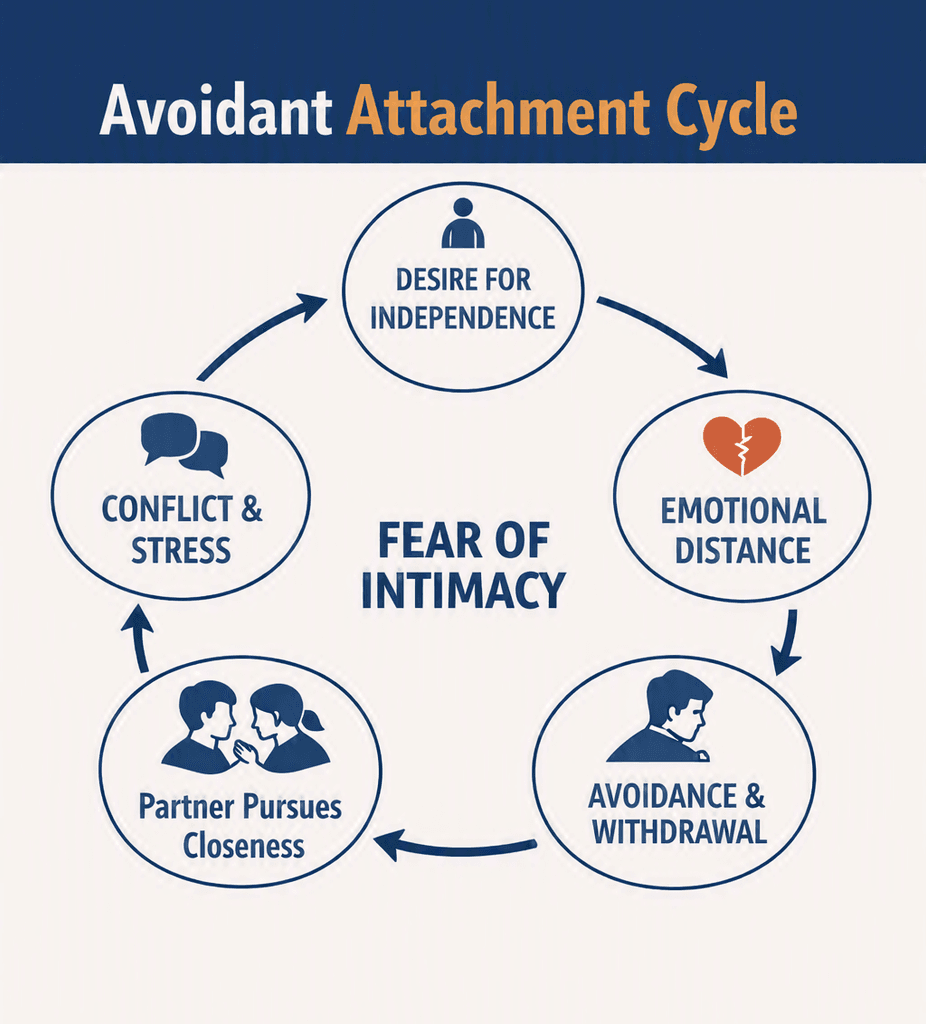
Reading about avoidant attachment can be helpful, but sometimes recognition becomes much more powerful when you look at your own patterns.
The following self-check is not a diagnosis and it cannot tell you your attachment style with certainty. Think of it as a mirror—a way to notice whether emotional distancing and self-protection may be showing up in your relationships.
For each statement, choose the answer that feels most like you.
1. When someone I love becomes emotionally close to me, I often:
A. Feel comfortable and enjoy the closeness.
B. Sometimes feel overwhelmed and need a little space.
C. Feel a strong urge to pull away.
D. Feel uncomfortable and may start questioning the entire relationship.
2. When I am upset with someone I love, I usually:
A. Tell them what I am feeling.
B. Take some time before talking about it.
C. Become quiet or emotionally distant.
D. Shut down completely or avoid the conversation.
3. When someone depends on me emotionally, I tend to:
A. Feel comfortable supporting them.
B. Help them but sometimes need boundaries.
C. Feel pressured by their emotional needs.
D. Feel an immediate need to create distance.
4. When a relationship starts becoming serious, I sometimes:
A. Feel excited about building something deeper.
B. Feel nervous but stay engaged.
C. Start wondering whether I really want the relationship.
D. Feel trapped and want to escape.
5. When someone treats me with genuine love and consistency, I:
A. Usually feel safe and appreciate it.
B. May take some time to trust it.
C. Sometimes feel suspicious or uncomfortable with it.
D. Find myself losing interest or looking for reasons to leave.
6. When I need emotional support, I usually:
A. Ask someone I trust for help.
B. Try to handle it myself first.
C. Find it difficult to ask anyone for help.
D. Prefer to deal with everything alone, even when I am struggling.
7. After an emotionally intimate conversation, I sometimes:
A. Feel closer to the other person.
B. Feel a little exposed but appreciate the connection.
C. Feel the need to retreat afterward.
D. Regret opening up and want to create distance.
8. When someone I love asks, “What are you feeling?”, I:
A. Can usually explain what is happening inside me.
B. Need some time to figure it out.
C. Find the question uncomfortable.
D. Feel irritated, shut down, or want to avoid answering.
9. When I create distance from someone I love, I often:
A. Feel confident that I made the right decision.
B. Feel mixed emotions.
C. Miss them once the distance grows.
D. Feel lonely and wish they would come closer again—but may withdraw when they do.
10. Deep down, the idea of depending emotionally on another person feels:
A. Natural and safe.
B. Possible, although sometimes difficult.
C. Uncomfortable and risky.
D. Frightening because it feels like giving someone the power to hurt me.
Your Results
Give yourself:
A = 0 points
B = 1 point
C = 2 points
D = 3 points
Add your points from all 10 questions.
0–7 Points: Emotional Closeness May Feel Relatively Comfortable
Your answers suggest that emotional intimacy and dependence may not be major sources of discomfort for you. You may still have relationship fears or difficult moments, but you generally seem able to remain connected while experiencing vulnerability.
Remember, this quiz is only a reflection tool. Your attachment patterns can also change depending on the relationship and circumstances.
8–15 Points: Some Protective Patterns May Be Present
You may be comfortable with closeness in some situations but pull back when emotions become intense or when you feel particularly vulnerable.
You might benefit from paying attention to the moments when you suddenly need distance. What happened immediately before you wanted to withdraw? What were you feeling underneath the urge to escape?
Sometimes the answer is not “I don’t love this person.”
Sometimes it is “I am uncomfortable with how much this person matters to me.”
16–23 Points: Avoidant Patterns May Be Affecting Your Relationships
Your answers suggest that emotional closeness and vulnerability may frequently activate your need for distance.
You may rely heavily on independence, struggle to express emotional needs, or feel uncomfortable when someone depends on you. You might also experience the confusing pattern of missing someone after pushing them away.
This does not mean that something is wrong with you.
It may mean that emotional self-protection has become an important part of how you navigate relationships.
Understanding where that protection came from can be an important beginning.
24–30 Points: Strong Emotional-Distance Patterns May Be Showing Up
Your answers suggest that you may have a strong tendency to protect yourself through emotional distance.
You may want love deeply while simultaneously feeling unsafe when someone gets close. You might shut down during emotional conversations, struggle to depend on others, or find yourself creating distance even when you do not actually want to lose the person.
If this pattern feels familiar, try not to use the result as a label.
You are not “an avoidant person.”
You are a person who may have learned ways of protecting yourself from emotional vulnerability.
And learned patterns can change.
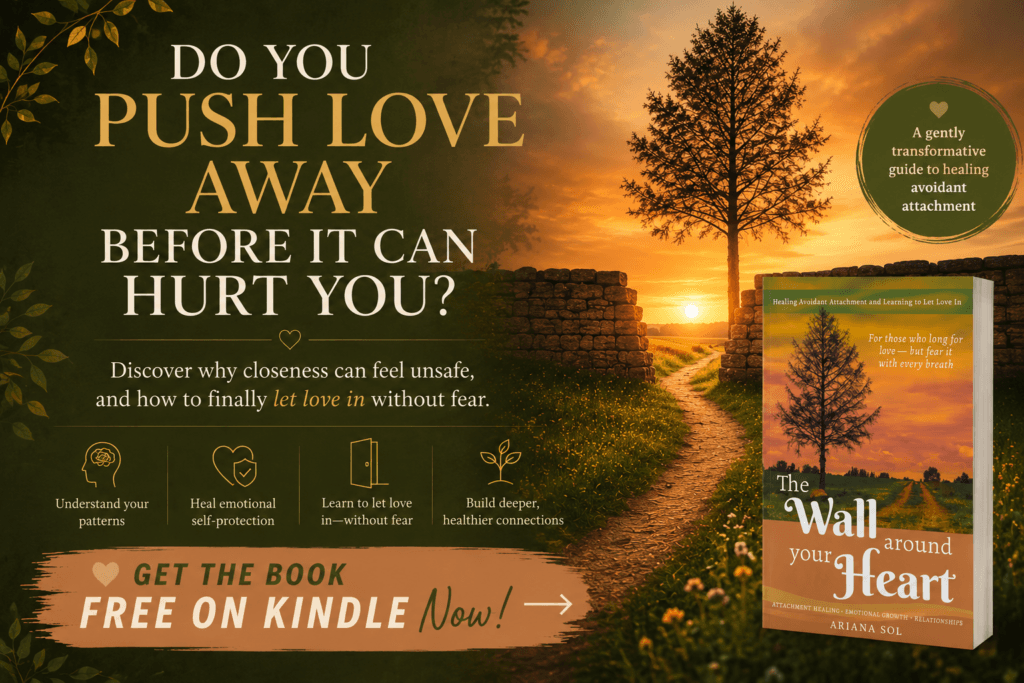
Or Get it now for just rupees ₹99/- or $3.99 USD
One Question Worth Sitting With
Whatever your score, ask yourself:
“When I push someone away, what am I actually protecting myself from?”
Is it rejection?
Abandonment?
Being controlled?
Being disappointed?
Being vulnerable?
Losing your independence?
Or simply the terrifying possibility of caring deeply about someone who could hurt you?
Sometimes the answer to that question tells you much more than a score ever could. And if you recognize yourself in this pattern, you do not have to tear down every wall around your heart at once.You can begin by understanding why you built it.
if your answers make you realize that you may have built stronger walls than you intended, you don’t have to figure everything out alone.
The Wall Around Your Heart: Healing Avoidant Attachment and Learning to Let Love In is Available and the Kindle edition will be FREE for a limited time soon.
Maybe the goal isn’t to tear down every wall overnight.
Maybe the first step is simply understanding why you built it.
Your free book is coming soon.