You finally meet someone you genuinely care about. At first, it may feel easy. You enjoy talking to them, look forward to seeing them, and perhaps even begin imagining what a deeper relationship could look like. Then something changes.
They start getting closer. They want to know how you feel. They become more emotionally available. Maybe they want more time with you, more honesty, more intimacy, or simply reassurance that you feel the same way. And suddenly, instead of feeling happy, you feel uncomfortable.
You may become distant. You might stop replying as often, feel irritated by their affection, or suddenly become unsure whether you want the relationship at all. Sometimes you may focus intensely on their flaws or convince yourself that you are better off alone.
The confusing part is that you may still love them. You may miss them after you create distance. You may feel lonely when they stop reaching out. You may even wish they would come back—until they do, and closeness begins to feel uncomfortable again.
So why do some people push away the very people they love?
The answer is not always that they are incapable of love or that they simply have not met the right person. Sometimes, the problem is that emotional closeness activates a protective response. A relationship can offer exactly what you have always wanted—love, connection, understanding—and still trigger fear.
When this happens, the desire for love and the desire to protect yourself can begin fighting each other.
Wanting Love but Pulling Away When It Arrives
It is entirely possible to crave connection and fear it at the same time.
One part of you may deeply want to be loved, understood, and emotionally close to another person. Another part may become anxious or overwhelmed the moment that closeness becomes real. This can create a painful pattern where you move toward love and then suddenly pull away from it.
You may not even recognize the pattern while it is happening.
Perhaps you feel strongly connected to someone in the beginning because there is still a certain amount of emotional distance. The relationship feels exciting, but you still feel independent and in control. However, as the relationship becomes more serious, the emotional stakes begin to change.
Now this person matters. Their opinion matters. Their presence affects you. You may begin to need them in ways that feel uncomfortable to admit. You have something to lose. That is often the point where self-protection can quietly enter the relationship.
Instead of consciously thinking, I am afraid of becoming emotionally dependent on this person, you may simply feel an unexplained urge to create space. You may tell yourself that something is wrong with the relationship. You may feel trapped, restless, numb, or suddenly less attracted.
The withdrawal can feel completely logical in the moment. But later, when the person is no longer as close, you may find yourself wondering why you pushed them away.
Why Emotional Closeness Can Feel Unsafe
For many people, emotional intimacy feels comforting. Being loved can create a sense of security and belonging.
But emotional closeness does not feel safe to everyone.
Sometimes, your nervous system learns from past experiences that getting close to another person comes with risk. Those experiences may come from childhood relationships, family dynamics, friendships, romantic relationships, or repeated experiences of rejection and disappointment.
Perhaps your emotions were ignored or dismissed. Maybe you learned that expressing a need led to criticism. Perhaps someone you depended on was inconsistent or unavailable. You may have experienced betrayal, abandonment, emotional manipulation, or relationships where love felt unpredictable.
As a result, closeness can become associated with vulnerability. And vulnerability can feel dangerous.
This does not necessarily mean that you consciously remember every experience that shaped you. Often, the protective response is automatic. Your body and mind may react before you have had time to logically decide whether the person in front of you is actually unsafe. That is why someone can genuinely be kind, loving, and trustworthy—and you may still feel the urge to withdraw. The problem may not be the person. The problem may be what emotional closeness represents to the part of you that learned it was safer not to need anyone too much.
Why Vulnerability Can Feel So Difficult
Loving someone requires a certain amount of emotional risk.
You cannot completely control whether another person will understand you, stay with you, or handle your heart carefully. To love is, in some ways, to allow another person to see the parts of you that you usually protect. Your fears. Your insecurities. Your needs. Your sadness. Your hope.
For someone who feels emotionally safe, vulnerability can deepen connection. But if vulnerability has previously led to shame, rejection, abandonment, or emotional pain, opening up may feel less like intimacy and more like exposing yourself to danger. This can lead to emotional habits that are difficult to recognize.
You may say you are fine when you are hurt. You may avoid asking for reassurance even when you desperately need it. You may intellectualize your feelings instead of expressing them. You may withdraw during conflict because staying emotionally present feels overwhelming. You may even convince yourself that you do not care.
Sometimes, emotional numbness is not the absence of feeling. Sometimes, it is what happens when feeling too much becomes overwhelming.
The wall goes up because some part of you believes it is safer behind it.
Emotional Self-Protection: The Walls We Build Around Our Hearts
- Pushing people away is often a form of emotional self-protection.
- If you do not get too attached, perhaps you cannot be hurt as badly.
- If you leave before someone leaves you, perhaps you can avoid abandonment.
- If you convince yourself that you do not need anyone, perhaps you will never have to experience the fear of losing them.
These strategies can make sense when viewed as attempts to protect yourself. The problem is that what once protected you can eventually begin limiting your life. You may become so skilled at protecting yourself from pain that you also protect yourself from intimacy.
You may want someone to love you but struggle to let them truly know you. You may want reassurance but feel uncomfortable asking for it. You may want a committed relationship but feel trapped when commitment becomes emotionally real.
This is the painful contradiction at the heart of emotional self-protection: the walls that keep pain out can also keep love out. That does not mean your boundaries are walls, or that needing independence is unhealthy. Healthy relationships allow space, individuality, and personal freedom. The question is whether your distance is a conscious choice or an automatic reaction to emotional closeness.
Are you taking space because you genuinely need time to think? Or are you running because someone is getting close enough to matter?
Could Avoidant Attachment Be Part of the Pattern?
Avoidant attachment is one possible explanation for why emotional intimacy can sometimes feel uncomfortable or threatening.
People with avoidant attachment patterns may value independence strongly and feel uneasy when they become too emotionally dependent on another person. They may genuinely care deeply while struggling to express their needs or tolerate the vulnerability that close relationships require.
This can sometimes create a confusing push-pull dynamic.
You may want love when it feels distant or unavailable. But when someone becomes emotionally present, affectionate, and committed, you may begin feeling overwhelmed. You may suddenly need more space or become intensely aware of everything that feels wrong with the relationship.
Some common patterns can include:
- Pulling away when someone becomes emotionally close
- Feeling uncomfortable when you depend on another person
- Avoiding difficult emotional conversations
- Shutting down during conflict
- Struggling to identify or express emotional needs
- Feeling trapped by expectations of closeness
- Focusing on a partner’s flaws when intimacy increases
- Missing someone intensely after creating distance
Of course, experiencing some of these behaviors does not automatically mean you have an avoidant attachment style. Everyone needs space sometimes. Everyone can become overwhelmed, especially during difficult periods.
What matters is the pattern.
If you repeatedly find yourself wanting connection, becoming uncomfortable when you receive it, withdrawing, and then feeling lonely once the connection is gone, it may be worth exploring what is happening beneath that cycle.
The Painful Cycle of Pushing Love Away
The cycle often begins with connection. You meet someone and feel interested, excited, or emotionally drawn toward them. There is enough distance for the relationship to feel safe, but enough connection for you to enjoy it.
As intimacy grows, however, your internal alarm system may begin responding. You may start feeling overwhelmed without knowing exactly why. Instead of recognizing the discomfort as fear, you may interpret it as a sign that something is wrong. Maybe you start questioning whether you really love them. Maybe their messages suddenly feel like pressure. Maybe you need space but do not know how to ask for it without disappearing.
So you withdraw. For a while, the distance may bring relief. You feel more independent, more in control, and less emotionally exposed. But then something else happens. You begin to miss them.
The connection you pushed away was still meaningful. The feelings did not disappear simply because you created distance. You may feel lonely, regretful, or confused about why you behaved the way you did.
And the cycle can begin again. Over time, this pattern can become exhausting. It can also create pain for the people involved, especially when neither person understands what is actually happening. The good news is that recognizing the pattern is an important first step toward changing it.
Can These Patterns Change?
Yes. Emotional patterns can change. But healing usually does not happen by forcing yourself to become completely vulnerable overnight. If emotional distance has been your way of protecting yourself for years, suddenly removing every defense can feel overwhelming.
A more helpful approach is curiosity. The next time you feel the urge to push someone away, pause and ask yourself what is happening beneath the reaction.
Are you genuinely unhappy in the relationship? Do you actually need space? Or are you feeling vulnerable, overwhelmed, or afraid of how much this person matters to you? Learning to recognize the difference between a genuine relationship problem and a protective reaction can be powerful.
You may also begin noticing the situations that trigger your withdrawal. Perhaps conflict makes you shut down. Perhaps too much affection feels uncomfortable. Perhaps you pull away immediately after a deeply intimate conversation.
The goal is not to judge yourself for these reactions. The goal is to understand them. Awareness gives you the opportunity to choose a different response.
- Instead of disappearing, you might learn to say, I care about you, but I am feeling overwhelmed and need some time to process.
- Instead of convincing yourself that you do not have feelings, you might allow yourself to identify what you are actually experiencing.
- Instead of automatically running, you might give yourself permission to pause.
These may seem like small changes, but they can gradually create a different relationship with intimacy.
Learning to Let People In Without Losing Yourself
One of the biggest fears behind emotional withdrawal is often the fear of losing yourself in a relationship. You may associate closeness with dependence. You may worry that loving someone means giving up your independence, your freedom, or your emotional control.
But healthy intimacy does not require you to disappear into another person.
- You can love someone and still have boundaries.
- You can need space and still communicate.
- You can be independent and still allow yourself to receive support.
- You can be vulnerable without telling someone everything before you are ready.
Learning to let people in does not mean removing every wall overnight. It means becoming more conscious about which walls are protecting your wellbeing and which ones are keeping you isolated.
Sometimes healing begins with a very small act of courage. Staying in a difficult conversation a little longer. Admitting that you are hurt instead of pretending that you are fine. Asking for reassurance. Allowing someone to care about you without immediately looking for a reason to pull away.
These moments can feel uncomfortable at first. But discomfort is not always danger. Sometimes, discomfort is simply the feeling of doing something differently.
You Are Not Broken for Protecting Your Heart
If you repeatedly push away people you love, it is easy to become frustrated with yourself. You may look back at relationships and wonder what would have happened if you had stayed, communicated, or allowed yourself to be more open. You may feel guilty about the people you hurt while trying to protect yourself. But self-protection usually develops for a reason.
At some point, those emotional defenses may have helped you survive experiences that felt painful, unpredictable, or unsafe. The problem is not that you built walls around your heart. The question is whether those walls are still serving you.
There is a difference between protecting your peace and protecting yourself from the possibility of being loved. Understanding that difference can be the beginning of real change. You do not have to become a completely different person. You do not have to stop needing space. You do not have to force trust where trust has not been earned. But if you are tired of wanting love and then pushing it away, you can begin exploring what happens inside you when someone gets close. You can learn where the fear comes from. You can learn to recognize the protective patterns before they take over.
And slowly, you can begin creating relationships where closeness does not require you to lose yourself. The walls around your heart may have been built for a reason. But you get to decide whether they still need to stay exactly as they are.
Coming Soon: Read The Wall Around Your Heart Free on Kindle
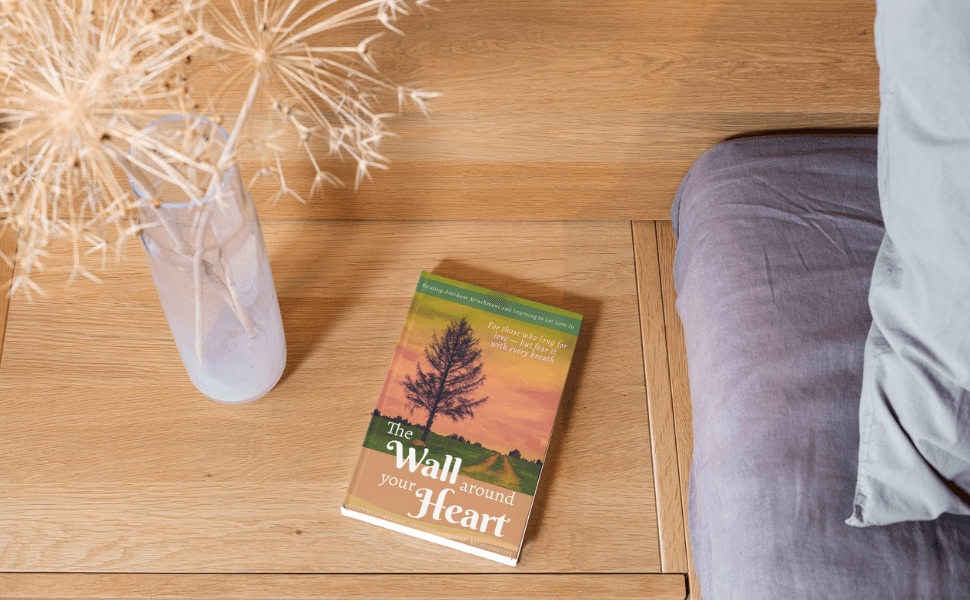
If you have ever wondered why you want love but withdraw when someone gets too close, The Wall Around Your Heart: Healing Avoidant Attachment and Learning to Let Love In explores the emotional patterns behind fear of intimacy, self-protection, vulnerability, and emotional withdrawal.
This is not about blaming yourself for the ways you learned to survive emotionally. It is about understanding your patterns, recognizing the walls you have built, and beginning to explore whether it is possible to let love in without losing yourself.
Coming soon: The Wall Around Your Heart will be available FREE on Kindle for a limited time.
Stay connected for the free Kindle promotion.
Or Get it now for just rupees ₹99/- or $3.99 USD